The Rise and Fall of the Concorde Legend
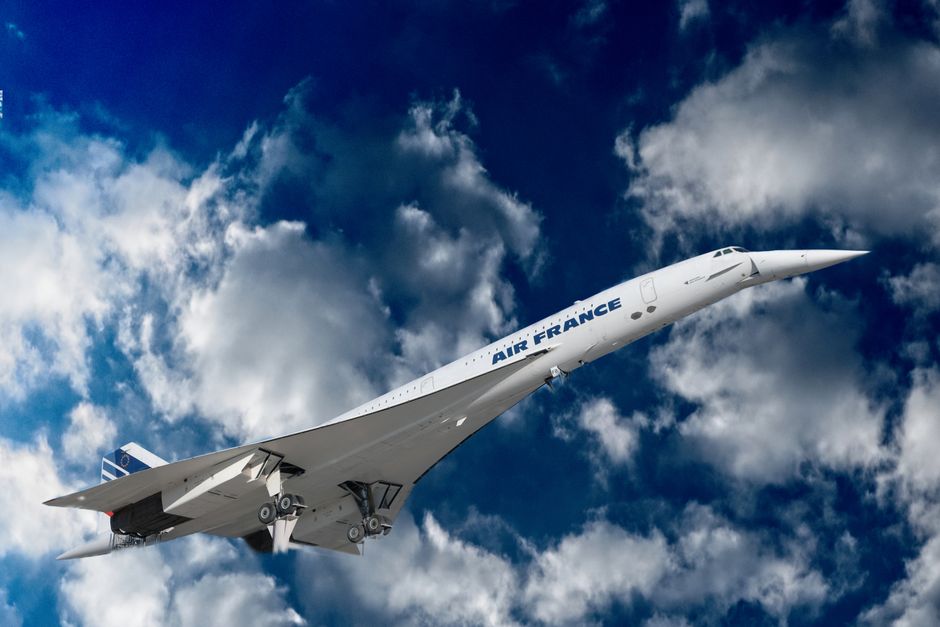
The Concorde remains one of the most iconic aircraft in aviation history, representing a bold leap into supersonic passenger travel. Developed through a landmark collaboration between British and French aerospace industries, this delta-winged jet captured global imagination from its maiden flight in 1969 until its retirement in 2003. Its story is not just about speed and luxury but also about the complex interplay of technological ambition, economic realities, and regulatory challenges that ultimately defined its operational lifespan.
During its 27 years of commercial service, the Concorde offered a unique travel experience—crossing the Atlantic in under four hours at twice the speed of sound. Yet behind the glamour lay a series of practical constraints, from high fuel consumption to environmental concerns over noise and sonic booms. Understanding the rise and fall of this legendary aircraft requires examining the factors that enabled its creation, sustained its operation, and finally led to its withdrawal from service.
This article explores the Concorde’s journey through the lens of engineering, economics, and aviation policy. It outlines the context in which the aircraft was conceived, the technical innovations that made supersonic travel possible, and the operational conditions that shaped its commercial viability. The goal is to provide a comprehensive overview of the Concorde’s place in aviation history without assuming definitive outcomes or offering prescriptive judgments.
The Birth of a Supersonic Dream
The origins of the Concorde date back to the late 1950s, when both the United Kingdom and France separately began investigating supersonic transport possibilities. At the time, the prevailing assumption in the aerospace sector was that supersonic passenger aircraft represented the natural next step in aviation evolution. By the early 1960s, the two countries recognized that the enormous research and development costs could be shared, leading to the landmark Anglo-French treaty signed in 1962. This agreement established a joint programme for what would become the Concorde.
The collaboration required unprecedented coordination across national borders, companies, and regulatory frameworks. British Aircraft Corporation (BAC) and Sud Aviation (later Aérospatiale) led the design and manufacturing, while Rolls-Royce and SNECMA developed the engines. The project involved sharing not only costs but also technical knowledge, testing facilities, and production responsibilities. Each partner had to align their engineering standards, manufacturing methods, and certification processes—a task that proved as challenging as the aerodynamics themselves.
By the time the first prototype rolled out in 1967, the aircraft had already faced significant technical hurdles. Designers had to solve problems related to supersonic drag, heat generation at Mach 2, and structural integrity under extreme conditions. The iconic ogival delta wing emerged as the optimal shape to balance low-speed lift for takeoff and landing with high-speed performance. The droop nose, which lowered to improve pilot visibility during approach, became one of the aircraft’s most recognizable features. These choices reflected a process of iterative testing and refinement rather than a single moment of inspiration.
Engineering and Design Achievements
The Concorde’s airframe was a marvel of mid-20th-century engineering. To withstand the high temperatures generated by air friction at Mach 2—approximately 127 degrees Celsius on the skin—the aircraft was constructed primarily from an aluminum alloy specially developed for the purpose. Unlike other supersonic military aircraft that relied on titanium or steel, the Concorde’s material choice allowed for a lighter structure while still meeting thermal demands. The fuselage was also designed to expand slightly in flight, accommodating thermal expansion without compromising pressurization.
The propulsion system consisted of four Olympus 593 turbojet engines, derived from a military engine used in the Avro Vulcan bomber. These engines were equipped with afterburners—reheat systems—to provide the extra thrust needed for takeoff and acceleration through the transonic regime. The air intakes were variable-geometry, adjusting automatically to manage airflow at different speeds and altitudes. Fuel and thermal management systems added further complexity, as the aircraft burned fuel in a controlled sequence to maintain center of gravity while also using fuel as a heat sink for the cabin air conditioning.
Key technical milestones included:
- First flight of the prototype (Concorde 001) from Toulouse on 2 March 1969
- First supersonic flight on 1 October 1969
- First transatlantic crossing on 26 September 1973
- Certification and entry into commercial service with British Airways and Air France in 1976
These accomplishments were not merely ceremonial; each phase required solving real-world problems such as controllability at low speeds, noise levels during takeoff, and fuel efficiency over long distances. The engineering decisions made during development had lasting implications for the aircraft’s operational profile.
Commercial Service and Operational Realities
The Concorde began scheduled passenger flights on 21 January 1976, with British Airways operating from London to Bahrain and Air France from Paris to Rio de Janeiro. However, the most iconic route—London–New York and Paris–New York—did not begin until 1977 after the United States lifted a ban on supersonic flights over its territory due to noise concerns. Even then, the Concorde was restricted to subsonic speeds over land, meaning its full potential was only realized over the Atlantic Ocean.
Fares were set at a significant premium—typically 20 to 30 percent higher than first-class tickets on subsonic aircraft. This pricing strategy targeted business travelers and high-net-worth individuals who valued time savings. The flight time from London to New York was around three and a half hours, compared to eight hours on conventional jets. In-flight service emphasized luxury, with gourmet meals, fine wines, and dedicated attention from cabin crew. The passenger capacity was limited to 100 seats (later increased to 128 for British Airways), making the operation inherently low-volume.
Flight operations required extensive coordination with air traffic control authorities, as the Concorde flew at altitudes between 50,000 and 60,000 feet—above most other traffic. Special flight planning accounted for atmospheric conditions, fuel reserves, and possible diversion airports. The aircraft also required unique maintenance procedures, including frequent inspections for thermal stress and structural fatigue. These operational demands translated into higher per-flight costs, which were partially offset by the premium fares but left little margin for error.
Challenges and Limitations
Despite its technical achievements, the Concorde faced persistent obstacles that limited its commercial success. Perhaps the most significant constraint was the sonic boom, a loud double shockwave created when the aircraft exceeded Mach 1. Overland supersonic flight was banned in many countries, including the United States, effectively confining the Concorde to transoceanic routes. This restriction severely narrowed the market, as potential routes across Asia, Australia, or within Europe were impractical or prohibited.
Fuel efficiency was another inherent limitation. The Concorde consumed roughly four times more fuel per passenger-kilometer than a comparable subsonic widebody aircraft like the Boeing 747. During the oil price spikes of the 1970s and 1980s, operating costs rose dramatically. Although airlines hedged fuel prices and maintained load factors, the economic viability of the Concorde remained fragile. Maintenance costs were also high due to the specialized nature of the aircraft and the limited number of units—only 20 were built, including prototypes—which prevented economies of scale.
Environmental regulations also played a role. Noise restrictions at airports, such as the ban on nighttime flights at New York’s John F. Kennedy International Airport, constrained scheduling. The aircraft’s distinctive roar during takeoff drew complaints from nearby communities. In addition, the Concorde’s emissions at cruising altitude, including water vapor and nitrogen oxides, raised questions about potential effects on the stratosphere. These concerns, while not conclusively proven at the time, contributed to a regulatory environment that made expansion of supersonic services difficult.
The Final Years and Retirement
The Concorde’s operational history took a decisive turn on 25 July 2000, when Air France Flight 4590 crashed shortly after takeoff from Paris Charles de Gaulle Airport. The accident was caused by a metal strip on the runway that punctured a tire, leading to fuel tank rupture and fire. All 109 people on board and four on the ground were killed. The resulting inquiry and subsequent modifications to the fleet grounded the Concorde for over a year, costing millions in lost revenue and reputational damage.
When service resumed in November 2001, the aviation landscape had changed. The September 11 attacks led to a sharp downturn in air travel demand, particularly among premium passengers. The Concorde’s load factors declined, and the economic case for continuing operations weakened further. Rising maintenance costs, aging airframes, and the need for costly upgrades—such as the installation of new safety systems—added pressure. By 2003, both British Airways and Air France announced that they would retire the fleet, with the final commercial flight taking place on 24 October 2003.
The decision to retire was not the result of a single factor but rather a combination of reduced passenger demand, high operating expenses, and the realization that future supersonic programs would not follow the Concorde’s model. The aircraft had never been profitable on a fully allocated cost basis; instead, it operated as a prestige service that generated positive publicity. After the accident and the post-2001 downturn, that justification no longer held. The retirement also reflected a broader industry shift toward efficiency and hub-and-spoke networks, where supersonic travel did not fit easily.
Legacy and Influence on Future Supersonics
The Concorde’s legacy extends far beyond its 27 years of service. It demonstrated that civil supersonic flight was technically feasible, providing valuable data on aerodynamics, materials, and systems for high-speed travel. Subsequent research programs, such as NASA’s Quiet Supersonic Technology (QueSST) and the European Space Agency’s studies, have drawn on lessons learned from the Concorde’s successes and failures. The challenge of mitigating the sonic boom remains a central focus for developing environmentally acceptable supersonic aircraft.
Today, several companies are pursuing new-generation supersonic business jets and airliners, including Boom Supersonic, Aerion (now dissolved), and Spike Aerospace. These projects aim to achieve lower supersonic booms, improved fuel efficiency through advanced engine designs and lighter composite materials, and compliance with modern noise and emissions standards. The Concorde’s experience underscores the importance of regulatory acceptance, economic viability, and public perception in bringing such aircraft to market.
In summary, the Concorde story offers a nuanced perspective on aviation progress. It was not a failure—rather, it operated under a specific set of conditions that limited its scalability. For Aviation Pulse, examining this history provides context for understanding how technological ambition interacts with practical constraints. The Concorde remains a symbol of what is possible when national industries collaborate, while also serving as a reminder that sustainable innovation requires balancing performance with broader environmental and economic factors.